
Google's Budget Tools Cut AI Agent Costs
Google introduces Budget Tracker and BATS framework to control AI agent costs by injecting real-time budget awareness, addressing runaway expenses, improving cost-efficiency, and aiding CIOs in managing total costs of AI deployments.
AIAUTOMATIONTECHNOLOGY
Eric Sanders
12/16/20254 min read
Taming the AI Spending Beast: How Google’s New Tools Could Change the Game for CIOs
In the rush to embrace AI, one nagging fear remains for every CIO and finance leader: runaway costs. AI agents, while powerful and transformative, have a notorious tendency to spin out of budget control if left unchecked. Google’s recent unveiling of the Budget Tracker and BATS framework is a bold step toward putting that fear to bed, injecting real-time budget awareness into AI operations and promising to help organizations harness the power of AI without breaking the bank.
Why AI Costs Have Felt Uncontrollable
AI isn’t your typical IT spend. Unlike predictable hardware upgrades or steady software subscriptions, AI expenses scale unpredictably with usage, complexity, and the volume of data processed. Enterprises often face a black box when it comes to AI spending—estimating costs can be guesswork, and monitoring expenses in real time is nearly impossible with existing tools.
This lack of visibility creates a dangerous cocktail:
- Runaway expenses: Slow, unnoticed budget overruns that balloon monthly invoices.
- Opaque billing models: Difficulty correlating AI workload to cost.
- CIO frustration: Pressure to innovate while managing total cost of ownership (TCO) for AI deployments.
Google’s announcement recognizes that AI’s promise must be tethered to financial discipline — and that without it, organizations risk financial and strategic headaches.
Introducing the Budget Tracker and BATS Framework
Google is addressing these pain points head-on by launching two complementary tools designed to shine light on AI spending and inject budget discipline into every AI agent’s lifecycle:
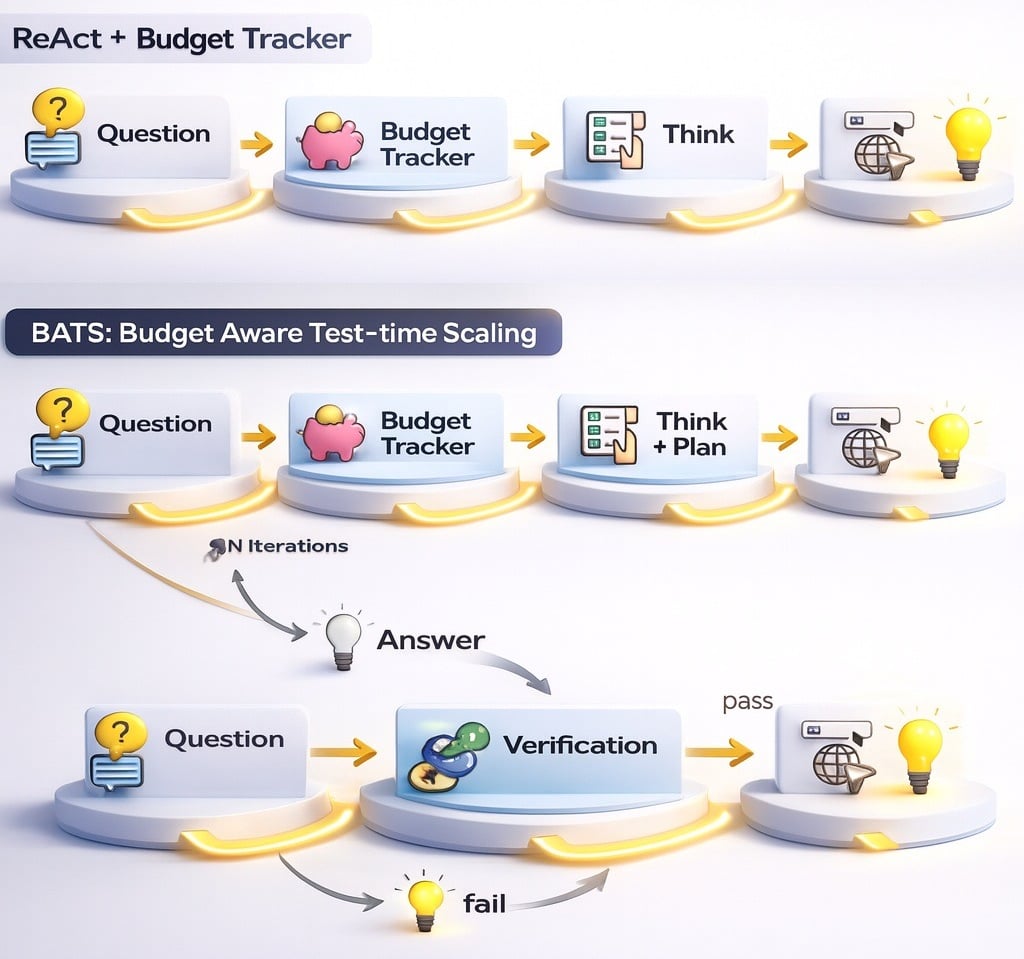
1. Budget Tracker: A real-time system that monitors AI agent usage and spending against predefined budgets, alerting users before costs spiral out of control.
2. BATS (Budget-Aware Task Scheduling) Framework: An intelligent scheduler that dynamically adjusts AI task execution based on budget constraints. It ensures costs stay within limits by controlling how and when agents run, optimizing the balance between performance and spend.
Together, these tools aim to offer CIOs and IT leaders a level of control that was previously unavailable, allowing AI deployments to scale responsibly.
The introduction of real-time budget tracking tied with cost-aware task scheduling fundamentally changes the AI cost management landscape:
- Proactive cost control: Instead of finding out after the fact about budget overruns, organizations can intervene immediately.
- Improved cost-efficiency: The BATS framework ensures AI agents operate within the financial guardrails, preventing waste without sacrificing performance.
- Better planning and forecasting: With tracked usage and costs, CIOs can more accurately predict future expenses and adjust AI strategy accordingly.
- Enhanced accountability: Teams running AI projects become more conscious of the financial impact, encouraging cost-conscious innovation.
As Google puts it, “Injecting real-time budget awareness... addresses runaway expenses and improves cost-efficiency, giving CIOs the tools they need to manage the total costs of AI deployments.”
Lessons for CIOs Managing AI Investments
For CIOs juggling innovation demands and tight budgets, Google’s Budget Tracker and BATS framework offer more than just tools — they embody a philosophy of fiscal responsibility woven into AI operations. Here’s what organizations can take away from this:
- Budgeting must be proactive, not reactive: Waiting for monthly invoices to flag overspending is too late. Real-time tracking is the way forward.
- AI execution can be smart and cost-aware: It’s not about cutting corners but optimizing when and how AI workloads run to maximize ROI without surprises.
- Transparency breeds trust: Clear visibility into AI costs helps justify investments and fosters alignment between IT, finance, and business units.
- Tools alone aren’t enough: Cultural change is needed where every stakeholder understands that AI is both a technical and financial commitment.
In short, the future of AI spending is not just about innovation but sustainable innovation.
AI Governance and Financial Management
Budget Tracker and the BATS framework aren’t just incremental improvements — they represent a significant shift in how enterprises can govern AI spend with precision. With cloud providers now offering tools tailored for cost control, the era of “black box” AI billing should start fading.
That said, CIOs must remember that technology is an enabler, not a panacea. Integrating these tools effectively demands:
- Clear budgeting policies aligned with business objectives.
- Cross-functional collaboration between IT, finance, and business units.
- Continuous monitoring and iterative refinement of AI project costs.
When harnessed thoughtfully, these tools can transform AI from a financial risk to a measurable, manageable asset—empowering innovation without fear of debt.
When Will We See This Become the New Normal?
The rollout of these tools signals an important evolution, but adoption across diverse organizations can take time. Smaller companies and those without mature cloud governance frameworks might lag behind. However, the benefits are undeniable, and competitive pressure will likely accelerate adoption.
What remains an open question is how other AI and cloud providers will respond. Will they follow Google’s lead, or will fragmentation in cost management tools create new complexities? The market will soon tell.
Who Benefits Most From Budget-Aware AI?
While CIOs stand to gain significant control, the ripple effects touch all corners of an organization:
- Finance teams gain clearer visibility and predictability over AI spend.
- AI development teams learn to innovate within financial limits, sharpening strategic decision-making.
- Business leaders get more reliable insights into ROI on AI initiatives, supporting better investment choices.
Ultimately, organizations that adopt such disciplined approaches now will be better positioned to scale AI responsibly, avoid budget shocks, and unlock the true potential of AI-driven transformation.
So here’s the real kicker: With these tools in hand, how will you rethink your organization’s AI strategy? How can you embed financial discipline deep into your AI workflows so innovation doesn’t come with wild cost swings?
Mastering AI’s promise isn’t just about cutting-edge technology—it’s about mastering costs too. And that, perhaps, is the secret weapon CIOs have been waiting for.
Efficiency
Transform your workflows and reclaim your time.
Contact Us
Need A Custom Solutions? Lets connect!
eric.sanders@thedigiadvantagepro.com
772-228-1085
© 2025. All rights reserved.